Warren County Clerk of Courts serves as the official keeper of records for the local judicial district in Ohio. This central office manages all key legal paperwork and administrative duties for the Common Pleas Court and the Municipal Court. The team maintains accurate, up-to-date files for civil, criminal, and domestic relations cases so justice runs smoothly for everyone. Residents rely on this trusted legal records office for transparent public records and highly efficient document processing services daily. Staff members carefully verify that every filing meets strict state standards and keeps data secure for the entire community. The robust court filing system helps organize thousands of complex documents safely and accurately for public review.
Warren County Court Clerk provides important support for vehicle titles and detailed case searches beyond standard court duties. This helpful resource outlines the exact steps required for submitting new legal documents and retrieving existing court records. Readers will find specific instructions for the busy Auto Title Division and effective methods to search the public docket. The clear information simplifies complicated court procedures so citizens can manage their legal obligations without stress or confusion. Following these instructions helps the court administration function properly and saves valuable time for everyone involved in a case. The wide range of clerk responsibilities includes customer service and guidance for self-represented litigants.
How to Search Warren County Court Records Online
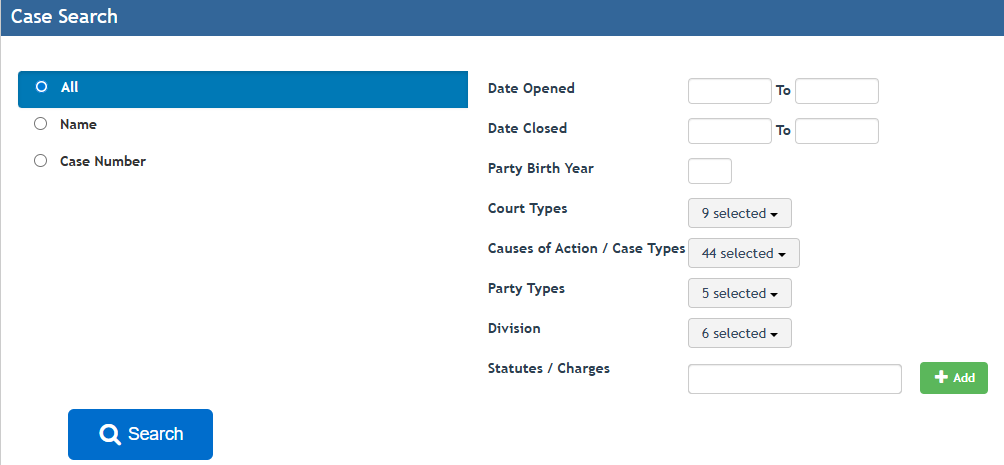
Warren County court records can be searched online through the Warren County Common Pleas Court Case Inquiry system. Users can look up public case information by entering a case number or party name and reviewing available court records, docket entries, and case details. Through Warren Court Access individuals can conveniently search available case information from any location. The Warren County Common Pleas Court Case Inquiry system provides online public record searching for cases handled by the Common Pleas Court. The database allows users to locate court records, review case activity, check filing information, and monitor case status without visiting the courthouse.
Official URL: https://clerkofcourts.warrencountyohio.gov/CommonPleasDiv/CaseInquiry
Search by Case Number
A case number search is the fastest and most accurate way to find a specific court record. Since every court case receives a unique case number, this search method typically produces the most precise results.
How to Search by Case Number
- Open the Warren County Common Pleas Court Case Inquiry system.
- Select the case number search option.
- Enter the complete case number.
- Review the entry for accuracy.
- Click the search button.
- Open the matching case record.
Why Use a Case Number Search?
A case number search helps users:
- Locate a specific court case quickly.
- View case status information.
- Review court activity.
- Check hearing schedules.
- Examine docket entries.
Search by Name
A name search helps locate court records when the case number is unavailable. Users can search using the name of a plaintiff, defendant, petitioner, respondent, or other party involved in a court case.
How to Search by Name
- Open the court records search portal.
- Enter the last name of the party.
- Enter the first name if known.
- Submit the search request.
- Review the list of matching records.
- Select the appropriate case.
Current Warren County Clerk of Courts
Breighton Smith serves as the Warren County Clerk of Courts and oversees the administration of court records, filings, and court-related services. The office supports the daily operations of the county court system and helps maintain accurate judicial records for public and legal use.
Professional Background and Experience
A combination of legal education, business knowledge, and administrative experience supports the leadership of the Warren County Clerk of Courts office. Educational achievements include a Bachelor’s Degree in Political Science from the University of Dayton and a Juris Doctor degree from Salmon P. Chase College of Law at Northern Kentucky University. Prior professional experience included work involving legal support, information technology, and business operations. This background contributes to the management of court records, office administration, and public service functions. Experience in both legal and operational environments provides valuable insight into the responsibilities handled by the Clerk of Courts office.
Leadership and Administrative Oversight
The Warren County Clerk of Courts office manages many administrative functions that support the local court system. Daily operations involve maintaining official court records, processing filings, preserving legal documents, and coordinating court-related information.
Administrative oversight extends across several key areas of court operations, including:
- Civil court records
- Criminal court records
- Domestic relations case records
- Court filing management
- Record retention and preservation
- Court cost and fee processing
- Public information services
The office works closely with judges, attorneys, law enforcement agencies, and court staff to support efficient case management and record administration.
Key Initiatives and Responsibilities
Maintaining accurate and organized court records remains one of the primary responsibilities of the Clerk of Courts office. Court documents must be properly recorded, stored, and preserved to support judicial proceedings and future record requests.
Key responsibilities include:
| Responsibility | Purpose |
|---|---|
| Court Record Management | Maintains official legal records |
| Filing Administration | Processes case filings and court documents |
| Docket Maintenance | Records court actions and case activity |
| Public Information Services | Provides court-related information to the public |
| Financial Administration | Handles court costs, fees, and payments |
| Records Preservation | Protects historical and active court records |
Serving the Community
The Clerk of Courts office serves residents, attorneys, businesses, government agencies, and other members of the public throughout Warren County. Reliable record management and administrative services help support transparency within the local judicial system. Public service responsibilities include assisting with court-related inquiries, maintaining accurate records, processing legal filings, and providing information about court cases and procedures. Through these services, the office helps residents interact with the court system more effectively and supports the fair administration of justice throughout the county.
Core Duties of the Warren County Clerk of Courts
The Warren County Clerk of Courts performs several administrative duties that help keep the court system organized and efficient. Key responsibilities include maintaining court records, processing legal filings, managing case documentation, collecting court-related fees, and supporting daily judicial operations.
Maintaining Official Court Records
Maintaining official court records is one of the primary responsibilities of the Clerk of Courts office. Every document filed with the court becomes part of the official record and must be accurately preserved throughout the life of a case. These records may include pleadings, motions, court orders, judgments, and other legal documents. Proper record management helps protect the integrity of the judicial process and provides a reliable history of court proceedings. The office follows established record retention procedures to preserve both active and historical case information. Accurate recordkeeping supports attorneys, judges, litigants, and members of the public who rely on court information.
Managing Case Documentation
The Clerk of Courts office manages large volumes of case-related documentation every year. Each document received by the court must be reviewed, organized, indexed, and linked to the correct case file. Effective document management helps maintain complete and accurate case records. It also allows court personnel to locate information quickly during hearings, legal proceedings, and case reviews.
Key documentation duties include:
- Organizing case files
- Recording court orders
- Indexing legal documents
- Updating case records
- Preserving historical files
- Maintaining document accuracy
These tasks help create a complete record of every case handled by the court.
Processing Court Filings
The Clerk of Courts office serves as the official filing authority for many court documents. Legal filings submitted by attorneys, parties, and court personnel must be processed according to court procedures and filing requirements. When documents are filed, the office records the filing date, updates the case file, and enters information into the court record system. This process helps keep case information current and supports timely court proceedings.
Common filings processed by the office include:
- Complaints and petitions
- Motions
- Responses and answers
- Court orders
- Judgments
- Notices and legal filings
Collecting and Recording Court Fees
The Clerk of Courts office is responsible for collecting and recording various court-related fees and costs. Financial transactions associated with court cases must be properly documented and maintained within official records.
These responsibilities help support court operations and maintain financial accountability. Accurate fee collection and recordkeeping provide a clear record of payments connected to court proceedings.
Financial duties may include:
| Duty | Purpose |
|---|---|
| Fee Collection | Receives court-related payments |
| Payment Recording | Maintains transaction records |
| Cost Tracking | Monitors court costs associated with cases |
| Financial Documentation | Preserves official payment records |
Supporting Judicial Operations
The Clerk of Courts office provides administrative support that helps courts operate efficiently. Many judicial functions depend on accurate records, organized case files, and timely processing of court documents. Support responsibilities include coordinating records, maintaining case information, preparing documentation for court proceedings, and assisting with the flow of information between court departments.
Through these duties, the office helps judges, court staff, attorneys, and litigants access the information needed for effective case management. Reliable administrative support contributes to the smooth operation of the Warren County court system and helps maintain public confidence in the judicial process.
Types of Cases Processed by the Clerk’s Office
The Warren County Clerk of Courts handles records for civil, criminal, domestic relations, traffic, and other court matters. Each case type is recorded, updated, and maintained in the official court system. The Clerk’s Office does not make court decisions. It only manages filings and official records. Every case type follows a structured system that supports court operations and record keeping.
Civil Cases
Civil cases involve legal disputes between individuals, businesses, or organizations. These cases usually focus on financial claims, property issues, or contract disagreements. The court reviews documents and evidence before making a decision.
Common civil matters include:
- Contract disputes
- Personal injury cases
- Property issues
- Business conflicts
The Clerk’s Office records all civil filings. Case documents are updated in the system as the case moves forward. These records are stored for future reference and legal use.
Criminal Cases
Criminal cases involve violations of law where the government files charges against an individual. These cases go through court review, where evidence and arguments are examined. The court then issues a final decision.
Common criminal cases include:
- Theft
- Assault
- Drug offenses
- Fraud
The Clerk’s Office maintains all criminal case records. Every filing, order, and update is entered into the system. This creates a complete legal history of each case.
Domestic Relations Cases
Domestic relations cases deal with family-related legal issues. These often include divorce, child custody, and financial support matters. Courts issue orders that affect long-term family responsibilities.
Common matters include:
- Divorce
- Child custody
- Child support
- Spousal support
The Clerk’s Office records all filings and court orders. Each document is stored in the official system. These records are important for ongoing legal reference.
Traffic Cases
Traffic cases involve violations of driving laws. These cases are usually based on citations or tickets issued for breaking road rules. Courts may assign fines or penalties depending on the violation.
Common violations include:
- Speeding
- License issues
- Signal violations
- Reckless driving
The Clerk’s Office manages all traffic case records. Citations and court actions are updated in the system. This helps maintain accurate case tracking.
Other Court Matters
Other court matters include cases that do not fall into standard categories. These cases still follow formal court procedures and require proper documentation. They may involve special legal actions or administrative filings.
Examples include:
- Appeals
- Name changes
- Garnishments
- Judgment actions
The Clerk’s Office records all such filings. Each case is documented in the system. This ensures a complete and organized court record database.
Services Available Through the Clerk’s Office
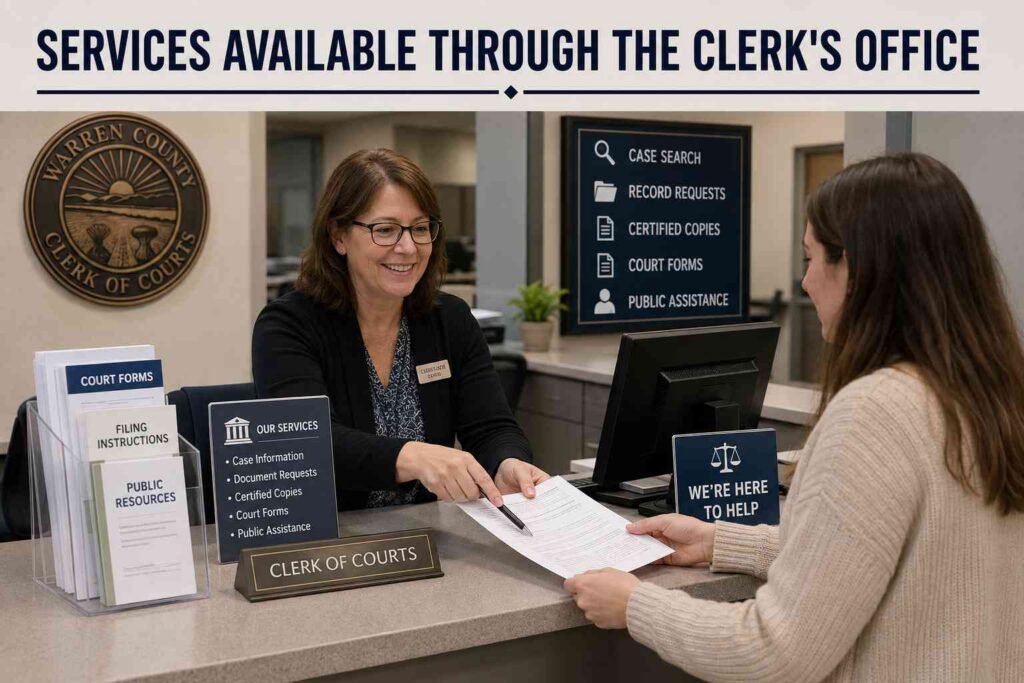
The Warren County Clerk of Courts provides several public services related to court records and case information. These services include case lookups, document requests, certified copies, court forms, and public assistance for record-related inquiries. The Clerk’s Office focuses on making court records accessible in an organized way. It supports the public, attorneys, and government agencies by providing official case information and document services through in-person and online systems.
Case Information Services
Case information services allow users to review basic details about court cases. These services help people check case status, party names, and general docket activity. Information is usually available through official court record systems. Users can typically find details such as filing dates, case numbers, and case progress updates. This service helps users stay informed about ongoing or past court matters. It also reduces the need for in-person courthouse visits.
Court Document Requests
Court document request services allow users to request copies of case-related records. These documents may include filings, motions, court orders, and judgments. Requests can be made depending on the court’s available procedures. The Clerk’s Office processes these requests based on record availability and legal access rules. Some documents may require additional time for retrieval. This service helps users obtain official records for legal or personal use.
Certified Copies and Record Retrieval
Certified copies are official versions of court documents that carry legal verification. These copies are often required for legal proceedings, administrative purposes, or official verification. They are stamped or certified by the Clerk’s Office. Record retrieval services help locate older or archived case files. These records may not always be available in digital format. The office assists in locating and providing access to these historical records when needed.
Court Forms and Resources
The Clerk’s Office provides access to standard court forms used for filings and legal procedures. These forms help users submit requests, file motions, or complete required legal paperwork. Forms are often available in downloadable or physical format. Resources may also include filing instructions and procedural information. This helps users complete court-related tasks correctly. It also supports consistent filing practices across different case types.
Public Assistance Services
Public assistance services help users with general questions about court records and filing procedures. Staff may provide basic guidance on how to use case search systems or request documents. This service is focused on general support rather than legal advice. The Clerk’s Office also assists with directing users to the correct department or resource. This helps improve access to court-related information. It ensures that users can find the correct process for their specific need.
Warren County Court Filing System
The Warren County court filing system handles submission of legal documents for different case types. Users must follow proper filing steps, meet document requirements, and follow court rules for accurate processing. The Clerk’s Office manages all filings submitted to the court. Every document is reviewed, recorded, and added to the official case file. Proper filing helps keep court records accurate and organized.
Filing Process
The filing process begins when a party submits legal documents to the Clerk’s Office. These documents are reviewed for basic completeness and then entered into the court system. Each filing is assigned to the correct case record. After submission, the filing is date-stamped and recorded in the docket. This creates an official record of when the document was received. The case file is then updated to reflect the new filing activity.
Types of Documents That Can Be Filed
Different types of legal documents can be submitted depending on the case type. Each document plays a role in court proceedings and must follow proper formatting rules. The Clerk’s Office ensures that all filings are properly recorded.
Common documents include:
- Complaints and petitions
- Motions and responses
- Court orders and judgments
- Notices and affidavits
Each document must match the requirements of the specific case category. Incorrect or incomplete documents may delay processing.
Filing Requirements and Deadlines
Court filings must meet specific requirements before they are accepted. These include correct formatting, required signatures, and proper case information. Missing details can result in rejection or delays. Deadlines are also important in court proceedings. Each case type may have specific time limits for submitting documents. Filing within the required timeframe helps ensure the case moves forward smoothly.
Common Filing Errors to Avoid
Filing mistakes can slow down the court process or lead to rejection. Many errors happen due to missing information or incorrect case details. Careful review helps avoid these issues.
Common errors include:
- Missing signatures
- Incorrect case numbers
- Incomplete forms
- Late submissions
Double-checking documents before submission helps reduce delays and ensures proper processing.
Online Filing Resources
Some filings may be supported through online systems depending on court procedures. These systems allow users to submit or prepare documents electronically. However, not all case types may be eligible for online filing. The online system also helps users check case details before filing. This reduces errors and ensures correct case selection. Users are encouraged to verify requirements before submitting any document electronically.
Court Records Management and Preservation
Warren County Clerk of Courts manages court records through a structured lifecycle process. This includes record creation, maintenance, storage, retention, and long-term preservation of official court documents. Court records are handled in a controlled system to keep them accurate and secure. Each record goes through multiple stages from filing to final archiving. This process helps maintain reliable legal documentation for court use and public reference.
How Court Records Are Maintained
Court records are maintained through continuous updates as cases move through the legal system. Each new filing, order, or court action is added to the official case file. This ensures that the record reflects the most current case status. Records are organized using case numbers and indexing systems. This makes it easier to locate specific case files when needed. The Clerk’s Office ensures that all updates are recorded in a consistent and accurate manner.
Records Retention Policies
Records retention policies define how long court documents must be stored. These policies follow legal requirements and administrative rules set for court systems. Different types of cases may have different retention periods. Retention schedules help ensure important legal records are preserved while less critical documents may be removed after the required period. This system supports both legal compliance and efficient record management.
Archiving Historical Records
Older court records that are no longer active are transferred to archival storage. These records are still preserved for legal reference, historical research, or future case verification. Archiving helps reduce pressure on active record systems. Archived records may be stored in physical or digital format depending on the system used. The Clerk’s Office ensures that these records remain accessible when legally required. Proper indexing is used to maintain retrieval accuracy.
Protecting Sensitive Information
Court records often contain sensitive personal and legal information. The Clerk’s Office follows procedures to protect confidentiality and prevent unauthorized access. Only eligible parties can access restricted information. Security measures help protect both physical and digital records. Access controls, verification systems, and monitoring processes are used to maintain record safety. This ensures that court information remains secure while still supporting public access where allowed.
Filing Legal Paperwork in Warren County
Filing legal paperwork in Warren County requires preparing correct documents, providing required case details, paying applicable fees, and submitting filings through approved methods. Proper preparation helps avoid delays or rejection. The Clerk’s Office reviews all submitted documents before adding them to official court records. Each filing must meet formatting rules and include accurate information tied to the correct case type. Careful preparation helps ensure smooth processing.
Documents Commonly Filed With the Clerk
Different types of legal documents are submitted depending on the case. Each document becomes part of the official court record and supports case progress. Filing the correct paperwork is important for proper case handling.
Common documents include:
- Complaints and petitions
- Motions and responses
- Affidavits and declarations
- Court orders and notices
Each document must match the requirements of the specific case. Incorrect documents may result in processing delays.
Required Information for Filing
Every filing must include accurate and complete information. This helps the Clerk’s Office assign the document to the correct case. Missing or incorrect details can slow down processing. Required details often include case number, party names, and contact information. Some filings may also require signatures or supporting documents. Reviewing all information before submission reduces errors.
Filing Fees and Costs
Most legal filings require payment of court fees. These fees vary depending on the case type and the type of document being submitted. Payment is typically required at the time of filing. Fee amounts are set by court rules and may change based on updates to court policy. In some cases, additional costs may apply for copies or special processing. Checking fee requirements in advance helps avoid delays.
Submission Methods
Legal documents can be submitted through different approved methods depending on court procedures. Each method follows specific rules for acceptance and processing. Users should select the method that matches their filing type.
Common submission methods include:
- In-person filing at the Clerk’s Office
- Mail submission of documents
- Electronic filing (if available for the case type)
Each method requires proper formatting and complete documentation for acceptance.
Preparing Legal Documents Correctly
Proper preparation of legal documents is important for successful filing. Documents must follow court formatting rules and include all required details. Incomplete or incorrect paperwork may be rejected. Before filing, users should check spelling, case information, and required signatures. Supporting documents should also be attached when needed. Careful review helps ensure that filings are processed without unnecessary delays.
Clerk of Courts Office Information
The Warren County Clerk of Courts office serves as the central administrative hub for managing court records, filings, and case-related documentation in Warren County, Ohio. It supports civil, criminal, domestic relations, and traffic court operations by maintaining accurate records and assisting the public with court-related services. Users rely on this office for official case information, document requests, and filing support.
Office Location
The Warren County Clerk of Courts office is located within the county courthouse area in Lebanon, Ohio. This is the main place where court records are maintained and filings are processed for different case types.
Address:
500 Justice Drive
Lebanon, OH 45036
United States
Contact Details
The Clerk’s Office provides official contact numbers for record-related questions, filing support, and general assistance. These contact lines help users connect directly with court staff for accurate information.
Main Phone: 513-695-1120
General County Info: 513-695-1000
Office Hours
The office operates during regular weekday business hours for public services and court-related work. These hours apply to most Clerk of Courts services including filings and record assistance.
Hours:
Monday – Friday: 8:00 AM – 4:30 PM
Frequently Asked Questions
Warren County Clerk of Courts FAQs help users understand court records, filing procedures, case searches, and public access to official documents. These questions cover common concerns related to records, filings, and court services. The Clerk’s Office manages official court records and filing processes for multiple case types. Many users have similar questions about how to search cases, request documents, and understand public access rules. The following answers explain the most common inquiries in a clear way.
How do I search Warren County court records?
Court records in Warren County can be searched using the official Case Inquiry system provided by the Clerk of Courts. Users can enter a case number or party name to find relevant court records. The system displays basic case information such as status, filings, and docket activity. This search tool is mainly used for public record access and case lookup. It helps users quickly locate court cases without visiting the courthouse. Accurate information improves search results and reduces confusion.
Can I file court documents online?
Some court documents may be filed online depending on the case type and court rules. Electronic filing is not available for every type of case, so availability can vary. Users must check whether their case qualifies for online submission. In many situations, documents can still be submitted in person or by mail. The Clerk’s Office reviews each filing before adding it to the official record. This process helps maintain accuracy and compliance with court procedures.
What types of records are maintained by the Clerk of Courts?
The Clerk of Courts maintains official records for all major case categories handled by the court system. These records include documents filed during civil, criminal, domestic relations, and traffic cases. Each record becomes part of the permanent court history. These records are updated throughout the case lifecycle as new filings and court actions occur. The office ensures that each document is properly stored and indexed for future reference. This helps maintain a complete legal record for every case.
Are court records available to the public?
Most court records in Warren County are considered public records under Ohio law. This means that many case details and filings can be viewed by the public. However, certain records may be restricted or sealed by the court. Sensitive information such as confidential case details may not be available for public viewing. Public access depends on the type of case and legal restrictions. The Clerk’s Office follows all applicable rules regarding record access.
How do I contact the Clerk’s Office?
The Clerk’s Office can be contacted by phone or visited in person for assistance with court records and filing questions. Staff members help users with general inquiries and direct them to the correct department when needed. This helps ensure users receive accurate information. Contact methods include official phone numbers and the courthouse location in Warren County. Office hours follow standard weekday business timings. Users are encouraged to confirm details before visiting for in-person assistance.