Warren County Probate Court Records contain official documents related to estate cases, wills, guardianship matters, and family legal proceedings in Probate Court Warren County Ohio. These records show how estates are handled after a person’s death under Ohio law. They include court case information linked to inheritance, property distribution, and legal heir confirmation. Many people rely on these records for estate settlement Ohio processes and legal verification. They serve as an official source for tracking probate activity within the county court system. These documents also support transparency in family and property-related legal matters.
Warren County Probate Court Records are often requested for inheritance documentation, estate claims, and verification of legal heirs. Families, attorneys, and researchers use them to confirm how assets were distributed through probate proceedings. These records may include wills, estate filings, guardianship details, and related court actions. They play a key role in resolving disputes and confirming rightful ownership of property. The Ohio legal system treats these records as official proof in probate matters. As a result, they remain an important reference point for anyone dealing with estate or family law cases in Warren County.
How to Search Warren County Probate Court
Warren County probate court records search at Warren County Court lets users find estate files, wills, guardianships, and related probate cases filed in Ohio. A probate case lookup Ohio system works through an online court records database or through the clerk’s office at the courthouse. Most searches start online, but older or sealed files may require a direct request from the court staff.
Official Probate Records Search Portal
All Warren County probate records search activity begins on the official court record system:
Official Search Page: http://probate.co.warren.oh.us/search.php
This portal provides public probate case lookup Ohio results for estate matters, guardianships, wills, and related filings. It is the main court records database for the county.
Open the search page
Go to the official Warren County Probate Court record search page.
Choose search type
Users can search using only one option:
- Name / Company
- Case number
- File date
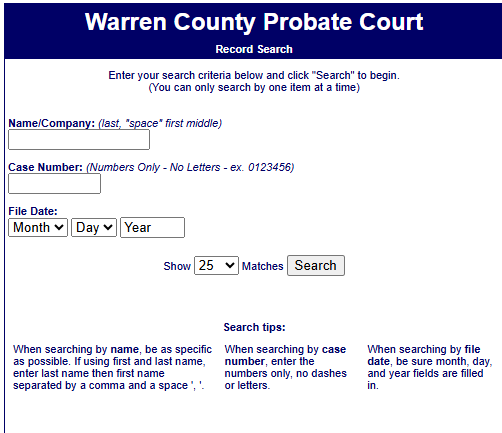
Enter correct format
Each field has strict formatting rules:
- Name search: Last name, first name (example: Smith, John)
- Case number: Numbers only (no letters or dashes)
- Date search: Month, day, year format
Run search
Click the search button to view matching probate cases.
Review results
Results usually show:
- Case title
- Filing date
- Case number
- Basic status information
Free vs Paid Probate Record Details
Warren County probate records search results are not all the same. Some details are free, while others require payment.
| Type of Record | Cost | What It Shows |
|---|---|---|
| Case summary | Free | Basic case info, status, dates |
| Docket entries | Free | Filing updates, hearing notes |
| Certified copies | Paid | Official legal documents |
| Full probate files | Paid | Wills, estate papers, court orders |
Limits of Online Probate Lookup Systems
The online probate case lookup Ohio system is helpful but not complete. Users may face some restrictions:
- Older probate cases may not be digitized
- Recent filings may take time to appear
- Some estate records remain confidential
- Full documents are often not shown online
The court may also limit certain sensitive records such as adoption or sealed estate matters. For complete details, the courthouse remains the most reliable source.
Types of Probate Cases Handled in Warren County
Warren County probate court handles several types of legal matters linked to estates, wills, guardianship, and inheritance issues. These probate cases in Ohio focus on distributing assets, confirming legal heirs, and resolving disputes after death or incapacity. Each case type follows a structured court process under Ohio probate rules. The court also supervises filings to maintain fairness in estate settlement.
Wills and Testament Cases
Wills and testament cases deal with checking whether a will is legally valid and can be enforced by the court. These matters often arise after a person passes away and leaves instructions about property distribution. The probate court reviews documents carefully to confirm authenticity and compliance with state law. If issues appear, the case may move into a contested stage.
Common situations include:
- Will validation process through witness and signature review
- Contested wills where family members challenge the document
- Executor appointment for estate management duties
In inheritance cases Ohio courts, disputes often start when relatives question fairness or suspect undue influence. The court then evaluates evidence, hears objections, and confirms whether the will should be accepted. Once validated, the executor receives legal authority to manage the estate.
Estate Administration Cases
Estate administration cases focus on managing and distributing a deceased person’s property under court supervision. These cases form a key part of the estate settlement process in Warren County probate court. The court assigns an executor or administrator to handle financial and legal responsibilities. This process continues until all debts and assets are properly resolved.
Main responsibilities include:
- Asset distribution among heirs or beneficiaries
- Debt settlement with creditors using estate funds
- Probate administration under court supervision
These cases often involve bank accounts, real estate, and personal property. The court ensures that all claims are verified before distribution takes place. Delays may occur if debts are disputed or ownership documents are unclear.
Guardianship Cases
Guardianship cases arise when a person cannot manage personal care or financial decisions. This may involve minors or adults with medical or cognitive conditions. The probate court appoints a guardian to act in the best interest of the individual. These cases are closely monitored to prevent misuse of authority.
Types of guardianship include:
- Minor guardianship for children without parental care
- Adult incapacity cases due to illness or disability
- Court supervision with required reporting duties
In these inheritance cases Ohio courts also review financial handling when property is involved. Guardians must submit regular reports to the court. This helps confirm that funds and personal care decisions are managed properly.
Inheritance & Heirship Disputes
Inheritance and heirship disputes involve disagreements about who has legal rights to an estate. These cases often occur when a will is missing, unclear, or contested. The probate court examines family relationships and legal documents to determine rightful heirs. These disputes are common in complex probate disputes involving multiple claimants.
Common issues include:
- Legal heir determination under Ohio inheritance law
- Family disputes over property division
- Estate litigation involving competing claims
The court evaluates evidence such as marriage records, birth certificates, and prior wills. In some cases, testimony from family members is also considered. Once heirs are confirmed, the court moves forward with estate settlement and distribution.
Probate Filing Process in Warren County Ohio
Probate filings Warren County courts handle follow a legal process that transfers a deceased person’s assets to heirs and beneficiaries. The process involves submitting legal paperwork, appointing a representative for the estate, and obtaining court approval before assets can be distributed. Each probate case moves through several stages, and the timeline depends on the size of the estate, the documents provided, and whether any disputes arise during the proceedings.
How Probate Cases Are Filed in Court
The court filing process begins when an interested party submits a probate application to the Warren County Probate Court. In many cases, the person named in the will files the paperwork shortly after the death of the estate owner. If there is no will, a family member may request appointment as the estate administrator. Once the filing is received, the court creates an official case record and assigns a case number. This record becomes the central file for all future documents, notices, hearings, and court decisions related to the estate submission process.
The filing stage typically includes:
- Submitting probate petition forms
- Paying applicable filing fees
- Opening an official probate case
- Receiving a court case number
Required Documents for Probate Filings
The probate court requires several documents before a case can proceed. These records help verify the death, identify beneficiaries, and establish the authority of the person managing the estate. Missing information can slow the review process and extend the probate timeline. The exact requirements vary by case type, though most probate filings Warren County courts receive include a death certificate, the original will if one exists, and information about heirs and assets. The court may request additional documentation if questions arise during the review.
Common documents include:
- Death certificate
- Original will
- List of heirs and beneficiaries
- Estate asset inventory
- Creditor and debt information
Role of Executor or Estate Administrator
The executor or administrator serves as the legal representative of the estate throughout probate administration. This person is responsible for carrying out court instructions and protecting estate assets until final distribution occurs. After appointment, the executor gathers financial records, identifies property, notifies creditors, and communicates with beneficiaries. The court expects regular compliance with filing deadlines and reporting requirements. If concerns arise about estate management, the court may schedule hearings or require additional documentation.
Some of the executor’s responsibilities include:
- Managing estate property
- Paying approved debts and taxes
- Filing reports with the court
- Distributing assets to beneficiaries
Court Review and Approval Stages
After the estate is filed, the probate court begins reviewing the submitted legal paperwork Ohio law requires. Court staff and the judge examine documents to confirm that the filing meets legal standards and that the correct person is handling the estate. The court may approve the appointment of an executor, validate the will, and authorize notices to creditors. As the case progresses, additional reviews may occur before property transfers or final estate closure can take place. In cases involving probate disputes, contested wills, or heirship questions, the court may hold hearings before issuing final decisions. These extra steps can increase the overall probate timeline.
Average Probate Timeline
The length of a probate case depends on estate complexity, asset value, creditor claims, and family disagreements. Smaller estates with clear documentation often move through the process much faster than contested cases. Many straightforward probate filings Warren County courts process can be completed within six to twelve months. Estates involving real estate sales, tax issues, multiple heirs, or probate disputes may remain active for a year or longer.
Typical timeframes include:
| Estate Type | Estimated Timeline |
|---|---|
| Simple Estate | 6–12 Months |
| Moderate Estate | 9–18 Months |
| Contested Estate | 1–2+ Years |
Estate Administration Process
Estate administration in Ohio begins after a person passes away and their legal and financial matters need formal handling. The estate settlement Ohio process follows court supervision to make sure assets, debts, and taxes are properly managed before anything is passed to heirs. This process is handled through probate administration and follows strict legal steps. Once a probate case opens, the court assigns responsibility to an executor or estate administrator who manages everything until the estate is closed.
What Happens After Someone Dies
After death, the estate becomes a legal matter that must go through probate if assets are titled in the deceased person’s name. The court first confirms whether a valid will exists and identifies who will manage the estate.
The initial steps usually involve:
- Filing the death certificate with the probate court
- Locating the will, if one exists
- Opening a probate case
- Appointing an executor or administrator
Executor Responsibilities
The executor plays a central role in managing the estate under court supervision. This person acts as the legal representative and must follow Ohio probate rules while handling all financial and legal tasks. Executor duties include collecting assets, managing estate property, and communicating with beneficiaries. The executor must also maintain detailed records and submit reports to the probate court when required.
Key responsibilities include:
- Identifying and securing estate assets
- Notifying heirs and creditors
- Managing estate property during probate administration process
- Preparing financial records for court review
Paying Debts and Taxes
Before any assets can be distributed, all outstanding debts and taxes must be settled. The estate is responsible for paying valid claims made by creditors. This step helps prevent future legal disputes and protects beneficiaries from liability. The executor reviews all claims and ensures payments are made in the correct order under Ohio law. Tax obligations may include final income tax returns and estate-related taxes if applicable.
Common payments include:
- Outstanding medical bills
- Credit card or loan balances
- Property taxes
- Court-approved claims
Distribution of Assets
After debts and taxes are cleared, remaining assets are distributed to heirs or beneficiaries. The distribution follows the instructions in the will or Ohio inheritance law if no will exists. Assets may include real estate, bank accounts, investments, or personal property. The executor ensures each beneficiary receives the correct share based on legal requirements.
Closing the Estate Legally
The final stage of estate settlement Ohio process involves formally closing the estate with the probate court. The executor submits a final report showing all debts paid, assets distributed, and obligations completed. Once the court reviews and approves the documents, the estate is officially closed, and the executor’s duties end. This marks the completion of the probate administration process and transfers full ownership rights to the heirs.
Guardianship Cases in Warren County Probate Court
Guardianship cases in Warren County Probate Court focus on protecting individuals who cannot manage personal care or financial decisions on their own. These cases include minors without proper parental care and adults facing incapacity due to medical or cognitive conditions. Guardianship records Warren County courts maintain include petitions, court orders, and supervision reports. The process works under Ohio law to support safety and proper legal custody arrangements.
Minor Guardianship Cases
Minor guardianship cases involve children who need a legally appointed guardian to care for them. These cases arise when parents are deceased, unavailable, or unable to provide proper care. The probate court reviews each situation carefully before granting authority to another responsible adult. The main focus remains the child’s safety, stability, and long-term wellbeing.
Adult Incapacity Guardianship
Adult guardianship cases apply when a person cannot manage personal or financial decisions due to incapacity. This may result from dementia, serious illness, disability, or mental health conditions. The court evaluates medical evidence and family petitions before making any appointment. These cases form an important part of family court protection systems in Ohio.
Typical conditions include:
- Dementia or memory-related decline
- Severe physical or developmental disabilities
- Long-term inability to handle finances or care decisions
The court appoints a guardian only when necessary and confirms that no less restrictive option is available. This protects the rights and dignity of the individual while providing needed support.
Court Approval Requirements
Before guardianship is granted, the probate court reviews all submitted documents and supporting evidence. Medical reports, financial details, and family statements are often required. The court evaluates whether guardianship is appropriate and in the best interest of the person involved. A formal hearing may be scheduled if questions or objections arise.
The approval process generally includes:
- Submission of guardianship petition forms
- Medical or incapacity documentation
- Background review of proposed guardian
- Court hearing if required
Responsibilities of Guardians
Once appointed, guardians take on legal responsibility for the care and management of the individual. Duties vary depending on whether the guardianship is personal, financial, or both. Guardians must act in the best interest of the ward at all times and follow court instructions. Proper recordkeeping is also required for transparency.
Core responsibilities include:
- Managing healthcare decisions and living arrangements
- Handling financial accounts if authorized
- Making decisions in the ward’s best interest
- Keeping detailed records of actions taken
Ongoing Court Supervision
Guardianship cases remain under continuous court supervision after approval. Guardians must submit regular reports showing financial activity and care updates. These guardianship records Warren County courts maintain help the judge monitor compliance and protect the ward’s interests. If issues arise, the court may adjust or terminate the arrangement.
Probate Court Fees & Processing Time in Warren County
Probate court fees in Warren County Ohio depend on the type of estate case filed and the number of services required during administration. The probate court cost Ohio system is based on fixed filing charges plus optional costs for copies, certifications, and additional filings. Along with legal fees estate expenses, the total cost changes depending on estate size and complexity.
Filing Fees in Warren County Probate Court
Warren County probate filings begin with a base filing fee paid at the time the estate case is opened. Based on the current official fee schedule, a full estate administration filing is approximately $155, while simplified estate procedures such as release from administration are typically around $70 . Additional common filing charges include certified copies, certificate of transfer requests, and document certifications, which usually range from a few dollars per page to fixed service fees depending on the request.
Typical filing charges include:
- Full estate administration: about $155
- Release from administration: about $70
- Certified copies: around $1 per page + small certification fee
- Additional motions or filings: varies by case
Estate Complexity Impact on Total Cost
The total expense increases when the estate involves multiple assets, disputes, or creditor claims. Simple estates remain close to the base filing fee, but complex cases require more court involvement and documentation.
Higher costs usually come from:
- Real estate valuation or appraisal requirements
- Multiple heirs or inheritance disputes
- Contested probate cases
- Debt settlement and creditor hearings
Average Probate Case Duration
The probate timeline in Warren County varies based on estate type and legal issues. Simple estates often move faster, while contested estates take longer due to hearings and additional documentation requirements.
General time ranges include:
- Simple estate cases: 6–12 months
- Standard probate administration: 9–14 months
- Contested or complex cases: 1–3 years or more
Cost Factors That Affect Probate Fees
Several elements influence the total probate court cost Ohio families pay beyond the initial filing charges. These factors depend on estate structure and court requirements.
Key cost factors include:
- Total value and type of estate assets
- Number of heirs involved in distribution
- Need for certified documents and court filings
- Attorney participation and legal representation
- Presence of probate disputes or litigation
Are Probate Court Records Public in Warren County?
Probate court records in Warren County are generally public under Ohio law. Most filings related to estates, wills, and guardianship cases fall under public records Ohio access rules. These records can usually be viewed through online probate systems or requested directly from the court clerk. However, certain documents may be limited or sealed depending on court orders.
What Is Available as Public Record
Most probate case information is open for public viewing and can be checked through the court’s record system. These records mainly show case activity and basic legal details, not always full documents. The goal is to provide transparency in estate and court matters while maintaining basic public access. Publicly available probate details often include case numbers, filing dates, party names, and case types such as estate administration or guardianship. Some docket entries and hearing schedules may also be visible depending on the case status.
Common publicly available information includes:
- Case number and filing date
- Names of involved parties
- Type of probate case
- Basic docket activity
- Selected hearing details
Sealed or Restricted Probate Records
Some probate records are not open to the public and remain sealed by the court. These restrictions are applied to protect sensitive information or maintain privacy in specific legal situations. Sealed court documents are not shown in standard search results or online databases. These restrictions often apply to cases involving minors, confidential financial information, or sensitive family matters. In some estate disputes, the judge may also restrict access to certain filings until the case is resolved. Restricted or sealed records may include adoption-related files, protected guardianship details, and confidential financial documents. In these situations, only authorized individuals such as attorneys, executors, or court-approved parties can review full case files.
Privacy Rules in Probate Court
Warren County Probate Court follows Ohio privacy laws to balance public access with personal confidentiality. While most probate filings remain open for review, the court limits access when sensitive data is involved. This approach helps protect families while still maintaining transparency in legal proceedings. Privacy restrictions may apply, especially in juvenile court cases involving minors, medical conditions, or ongoing disputes. The court may also limit access to prevent misuse of personal financial or estate information. Even though probate records are generally public, sealed documents remain fully protected unless a judge issues permission for release.
Location, Jurisdiction & Contact Details
Warren County Probate Court is the official county authority handling estate, guardianship, and probate matters within Warren County, Ohio. It processes wills, estate filings, and related legal cases under Ohio probate law. Residents, attorneys, and heirs use this court for case filings, record requests, and probate hearings connected to family and estate matters.
Physical Location, Office Hours & Contact Details
The Warren County Probate Court is located in Lebanon, Ohio, and serves all communities within the county under the Court of Common Pleas system.
Official Address:
900 Memorial Drive
Lebanon, OH 45036
Phone Number:
(513) 695-1180
Office Hours:
Monday – Friday: 8:00 AM – 4:00 PM
Closed on weekends and official court holidays
Frequently Asked Questions
This section covers common questions related to probate lookup Ohio services, estate records access, and court document request procedures in Warren County. It helps users understand how probate records work, what can be searched, and how estate cases are handled through the court system.
What records are available in probate court?
Probate court records include many types of estate and family-related legal documents created during the handling of a case. These records show how estates are managed, how assets are distributed, and how the court supervises each stage of the process. Most records are stored in the court system and can be viewed depending on access rules. Available records often include estate filings, wills, guardianship orders, and estate inventories. Court docket entries and hearing updates may also be included. These documents help track the progress of a case from filing to final settlement.
How do I search probate records in Warren County Ohio?
Probate records in Warren County can be searched through the official court system or by visiting the probate court office in person. Most users begin with online probate lookup Ohio tools by entering a name, case number, or filing date to find estate information. This helps locate relevant case files more quickly. The system usually provides basic case details such as names, case type, and filing status. For full documents or complete files, a court document request may be required. Staff at the courthouse can also assist with locating older or archived records.
Are probate records public in Ohio?
Most probate records in Ohio are considered public records under state law and can be viewed by anyone. This includes basic case information such as filing dates, party names, and case types. These records are maintained to ensure transparency in court proceedings. However, some records are not publicly available. Sealed court documents, sensitive financial details, or cases involving minors may be restricted. Only authorized individuals such as attorneys, executors, or approved family members can view those records.
How long does probate process take?
The probate process in Warren County depends on the complexity of the estate and whether any disputes arise. Simple cases with clear wills and no conflicts usually move through the system faster. More complex estates take longer due to additional court steps and documentation. In general, simple estates may take around six to twelve months to complete. Larger or contested cases can take one year or longer depending on court hearings, creditor claims, or missing documentation. The timeline varies based on how smoothly the estate is managed.
Can I get a copy of a will?
Yes, copies of wills can usually be requested through the probate court once the document has been filed as part of an estate case. These copies are issued as certified probate records Ohio when needed for legal or official use. They are commonly used for property transfers or financial matters. To obtain a copy, a formal court document request must be submitted with case details or the name of the deceased person. The court then provides either certified or regular copies depending on the request. Availability depends on whether the will has been officially filed and recorded in the court system.